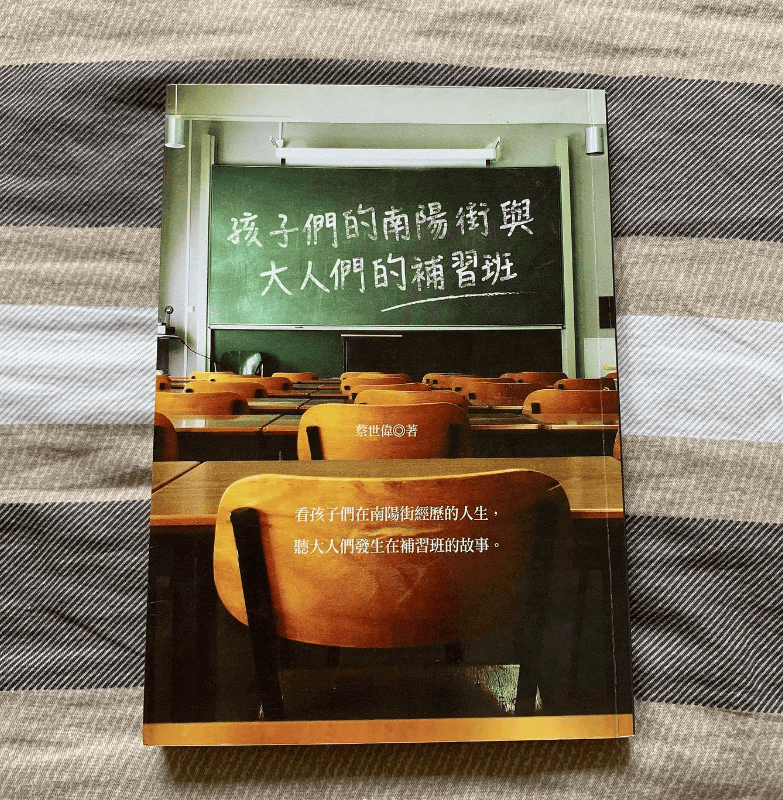
Children's Nanyang Street and Adults' Cram Schools
2021年9月5日
"The next four years of university will be the best days of your lives."
Wayne's teacher spoke with such conviction that it felt less like a prediction and more like a reminiscence. "You'll discover that the grand productions and intense romances you thought were amazing in high school are actually trivial. At university, there's always something more exciting to do. You need to treasure this time dearly. Because the most carefree and exhilarating period of your life might truly be just these four years of university."
This was the most memorable thing I heard in Wayne's English class during my final year of high school. Wayne, ten years our senior, wasn't a figure of authority to us high schoolers—he was more like a peer. The memories he'd casually share during class were the future we gazed up at from behind our textbooks. After entering university, you become an adult. Freedom seems within reach—but what would that feeling actually be like?
Children's Nanyang Street and Adults' Cram Schools is a memoir documenting the youthful days of high school students while also chronicling the business ventures of adults running cram schools. Initially, I was a student listening from the audience. After the book's publication, I became a third-year student who should have started (but kept postponing) thinking about my future. Reading it again, I'm already a working professional two years into my career, having switched to my dream job. Each time I read this book, I have a different experience—it feels like the sensation of a young person listening to rain.
The biggest difference is that on my first reading, I focused entirely on the student section, thinking about how unique certain students were and relating to their worries. On my second reading, I found myself naturally drawn to Wayne's experiences at the cram school, the difficulties he faced navigating management.
I also realized that those Wednesday evenings I'd eagerly anticipated back then—the mock exam solution sessions that made me feel like I was glimpsing the free world of adults—were actually built on countless hours of hard work, bitterness, and even self-doubt before being presented to us. Only after entering the workforce did I notice the effort behind the polished exterior.
The author of this book, Tsai Shih-Wei @waynetsai1984, is a cram school teacher and renowned English translator. Books he has translated include: Atomic Habits, Crushing It!, Michael Jordan: The Life, The Mamba Mentality, and The Daily Awakening, among others.
The book is divided into three sections: "What These Students Taught Me," "Tales from the Cram School," and bonus content titled "Casual Chats Between Classes."
"What These Students Taught Me" features the eccentric students Wayne taught at the cram school—there's Mori with his strict mother, a military enthusiast passionate about Isoroku Yamamoto, and a top-tier baker from Taipei First High School who excels at both exams and baking. Each high school student mentioned stands out remarkably within the standardized manufacturing process of high school education designed to meet the standards of the college entrance exams. Their distinctiveness comes from having particular passions, special skills, or even being exceptionally obedient and non-rebellious. After reading this section, I couldn't help but think of Pink Floyd's "Another Brick in the Wall." Does education make us better, or is it simply a filtering mechanism?
"Tales from the Cram School" documents Wayne's experiences and encounters at Liu Yi English. From entering the industry to becoming the star teacher of the cram school, from the glamorous lecture platform to prep time after class, and navigating relationships with management. What impressed me most was when Liu Yi, the cram school owner, once told Wayne: "I hate you!" Despite this, Wayne expressed in the book that he deeply respects Liu Yi. The biggest reason is that he was moved by Liu Yi's passion for teaching English. Liu Yi once said on stage: "If I suddenly died, it wouldn't matter—I've already prepared all the lecture materials, and other teachers can take over."
When I attended cram school in high school, I received newly compiled vocabulary books, grammar books, and sentence pattern books from Liu Yi's publishing house every semester. Though few people actually read them, this spirit of approaching something you care about with unwavering dedication deeply moved me.
"Casual Chats Between Classes" excerpts over a dozen passages that profoundly inspired Wayne, accompanied by his personal experiences as verification. This is my favorite part of the book. Kensuke Kensho, the founder of the Japanese publisher Gentosha, once said: "What matters isn't what's written in the book, but how you feel about it." While reading the casual chats section, this quote suddenly came to mind.
Wayne loves reading and engages in dialogue with authors through his own life experiences. Reading Children's Nanyang Street and Adults' Cram Schools lets you see the questions and answers that people ahead of us on life's journey have repeatedly pondered. It also shows you that you're not alone in having these worries. Though we must live our own lives by ourselves, we are not solitary. 😉
The reading of all good books is like conversation with the finest men of past centuries. - René Descartes
The wave of digitalization sweeps across everything, and no one can stand apart from it. Let Readmoo guide you through the sea of words! Click the link below to register as a Readmoo member and enjoy a 21% discount on your first purchase within 30 days, plus an extra $100 book voucher on orders over the threshold within 60 days!
Register now 👉 http://moo.im/i/DbsBO
Buy now Children's Nanyang Street and Adults' Cram Schools and rekindle those summer memories of yearning for the adult world 👉 https://moo.im/a/3fglvC